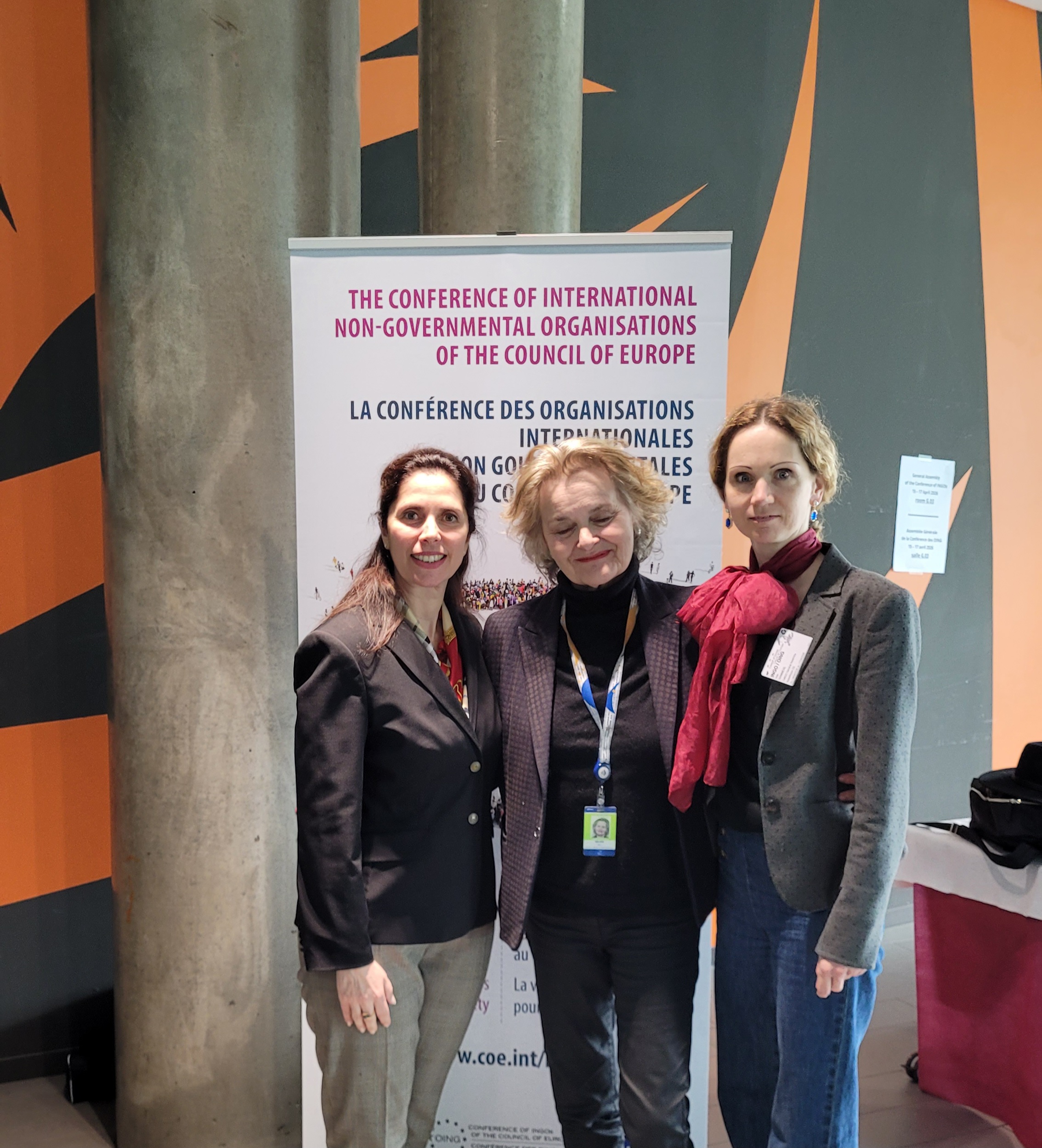
The Conference of International Non-Governmental Organisations (INGOs) of the Council of Europe is the representative body of the INGOs enjoying participatory status with the Council of Europe.
“The Conference of INGOs has long provided a dedicated space in which civil society is both represented and better equipped to help ensure that international standards are understood and respected.” – Secretary General of the Council of Europe, Marija Pejčinović Burić, at her exchange of views with the Conference of INGOs in October 2020
As the representative body of the INGOs enjoying participatory status with the Council of Europe, the Conference facilitates the participation of organised civil society in the work of the Council of Europe. It serves as a platform where civil society can interact with the Council of Europe in the attainment of its goals. It also promotes participatory democracy, active citizenship and freedom of association.
The Conference of INGOs underwent a major reform in 2020 with the adoption of new Rules of Procedure. The main aim of this reform was to make the Conference a lighter structure and more relevant to the Council of Europe.
The Conference is governed in accordance with its Rules of Procedure and operates under the rules and mission of the Council of Europe according to Resolution (2016)3 of the Commitee of Ministers.
The voice of civil society at the Council of Europe
There are various ways through which the Council of Europe and civil society entertain a dialogue and cooperation, both in the various intergovernmental activities related to standard setting, monitoring and cooperation activities and through the work and dialogue involving the various major political and other bodies of the Organisation. The dedicated civil society portal provides an overview.
The participatory status that can be granted to International NGOs (INGOs) for a renewable period of four years is one of the ways to engage on an on-going basis with the Council of Europe. It was introduced in 2003, replacing the earlier consultative status dating back to 1952. The Conference of INGOs (CINGO) thus brings together these organisations with participatory status, and through its working structures and on an ad hoc basis, also other organisations interested in its work.
Being the voice of civil society at the Council of Europe, CINGO is federating individual voices into a political and policy dialogue with the Organisation and its member States. It thus constitutes the civil society pillar in the Council of Europe “quadrilogue” with the Committee of Ministers, the Parliamentary Assembly and the Congress of Local and Regional Authorities.
The role of the Conference of INGOs is recognised in the Commitee of Ministers’ Resolution (2016)3 – Participatory status for international non-governmental organisations with the Council of Europe and it is governed in accordance with its Rules of Procedure.
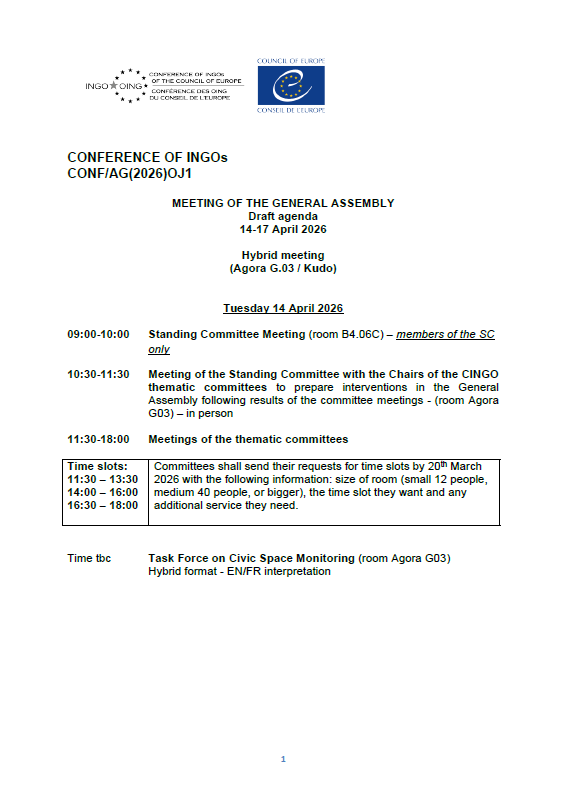
The number of INGOs with participatory status has varied between 260 and more than 300 in recent years. As an assembly, CINGO establishes thematic committees and other working bodies to conduct work in priority areas (e.g. gender equality, environment, Youth, education, social matters, migration, civic space in Europe) and prepare the main decisions and positions to be discussed at the General Assemblies. The Conference meets in Strasbourg twice a year.
The Conference of INGOs is chaired by a President who is assisted by two Vice-presidents and a standing committee. They are elected for a renewable term of three years.
CINGO is supported financially by the Council of Europe and contributions from the INGOs in the form of membership fees to an association called INGO Service. It was set-up in 1994 and registered in Strasbourg under French law.
The Conference adopts every three years a strategic plan defining its priorities and the main orientation of the work through the thematic committees.
The dialogue with countries (taking the form of country visits and reports, and official correspondence with the governments), supporting the development of democratic participation in Europe and preserving an enabling environment for civil society are of paramount and ongoing importance. CINGO is supported in this task by its Expert Council on NGO Law, which analyses and reports through it studies and opinions on problematic trends and legal developments in Europe.
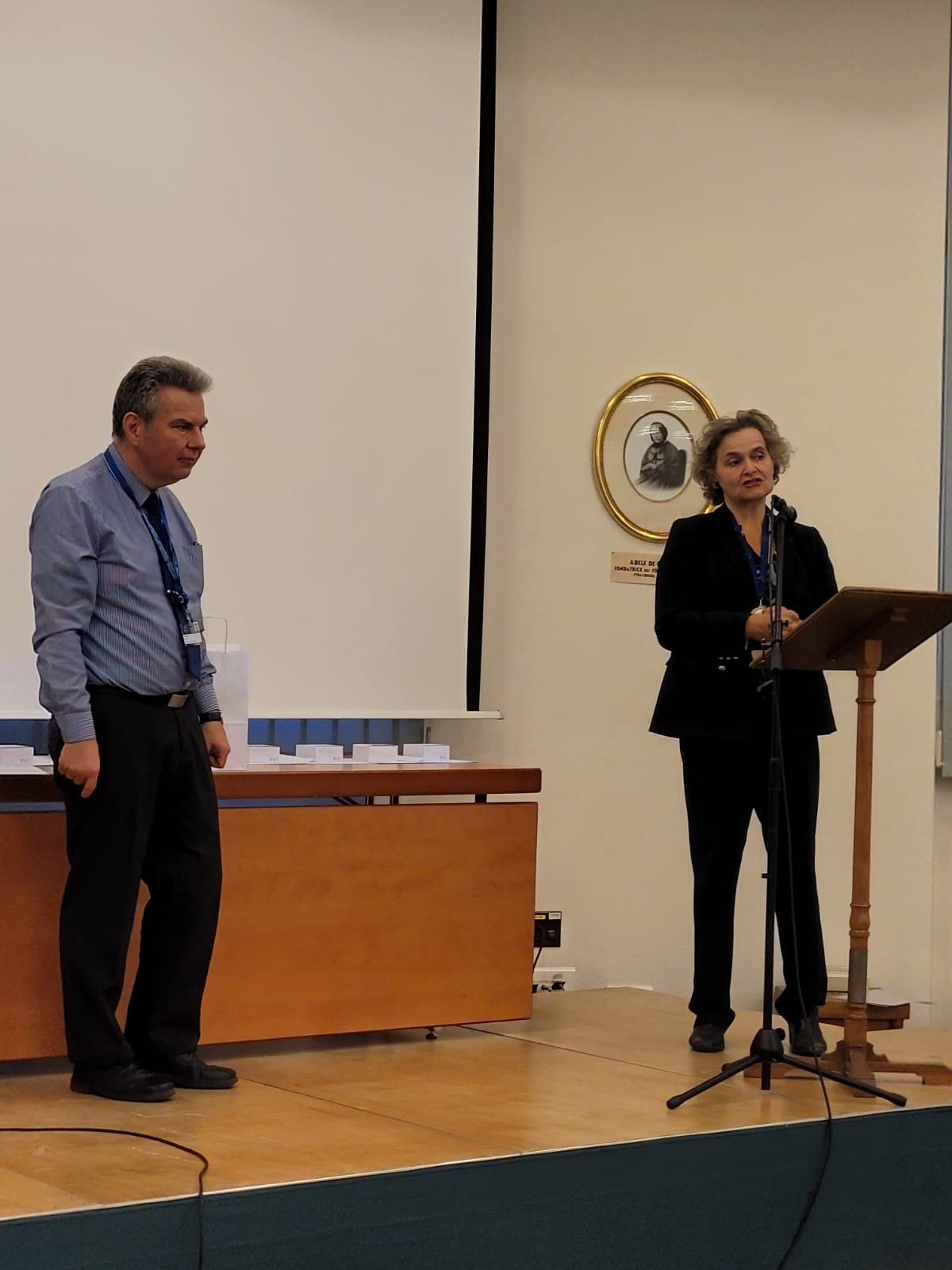
We are pleased to share that Dr. Anne Nègre, President of University Women Europe, is recently awarded with the “Medal of Honor” from the Award Committee of the Conference of International Non Governmental Organisations of the Council of Europe (CoE) “for the constant and exemplary commitment of Mrs. Negre to the associations for solidarity, European citizenship, understanding and approaches between peoples, civil society and human rights”.
This medal was given by Mr. Gerhard Ermischer, President of the Conference of INGOs of the CoE on the 5th October 2022 in Strasbourg, France.